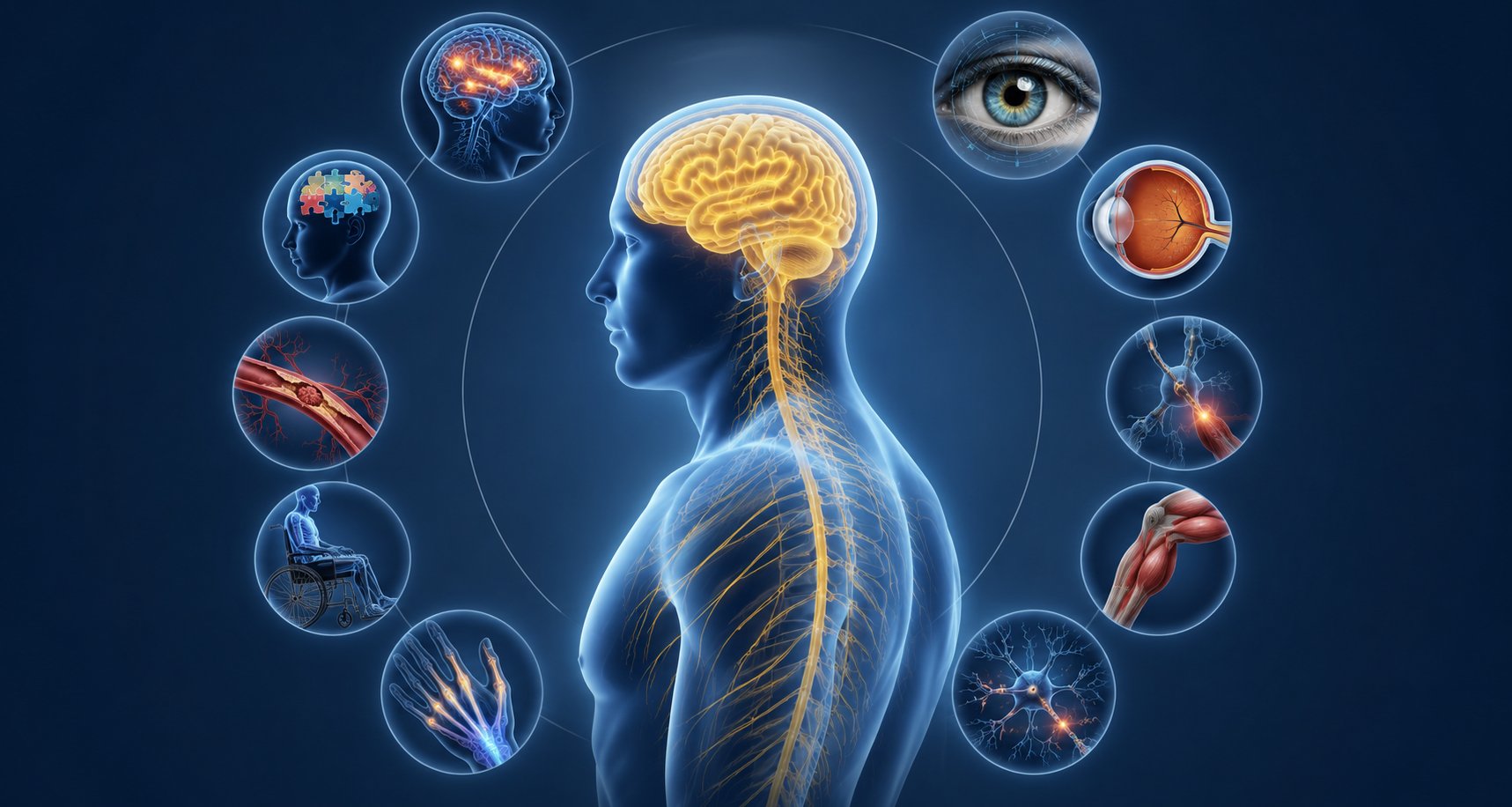
What Is Spinal Cord Injury?
A spinal cord injury (SCI) affects the spinal cord — the bundle of nerves that carries messages between the brain and the body. When the spinal cord is damaged, it disrupts the signals that control movement, sensation, and automatic body functions. The extent of disability caused by an SCI depends on the level of the injury in the spine (cervical, thoracic, lumbar, or sacral) and whether the injury is complete (no function below the injury level) or incomplete (some function remains). Approximately 500,000 new spinal cord injuries occur worldwide each year — most caused by motor vehicle accidents, falls, violence, or sports injuries. Many people with SCI go on to live full, active lives with appropriate medical care, rehabilitation, and assistive technology.
Common Symptoms
Spinal cord injury symptoms vary depending on the level and completeness of injury. Common effects include: loss of movement (paralysis) — may affect the legs only (paraplegia) or all four limbs (tetraplegia/quadriplegia); loss of sensation including the ability to feel heat, cold, or touch; loss of bowel or bladder control; exaggerated reflex activities or spasms; changes in sexual function; pain or intense stinging sensations caused by nerve damage; and difficulty breathing or clearing secretions (in higher cervical injuries). Incomplete injuries may allow for partial function below the injury level, and recovery of some function may occur — particularly in the weeks and months following injury.
Research & Treatment Development
Spinal cord injury research is an active and rapidly advancing field. Key areas include: nerve regeneration studies — including the role of growth factors and biological scaffolds in promoting axonal regrowth; advanced medical innovation approaches targeting spinal cord repair and functional restoration; exoskeleton and robotic mobility technologies enabling standing and walking for those with lower limb paralysis; rehabilitation robotics and functional electrical stimulation (FES) systems; advanced physical therapy methods including activity-based therapy (ABT); epidural spinal cord stimulation — an emerging technology that has enabled some patients with complete injuries to regain voluntary movement; and neuroprotective protocols aimed at minimising secondary injury in the acute phase.
Our Approach at Med Cure Centre
At Med Cure Centre, we provide specialist spinal cord injury assessment, advanced treatment protocols, and comprehensive rehabilitation support. Our team understands the profound physical and psychological impact of SCI and takes a whole-person approach to care. Dr. Nitisha Goyal (Senior Consultant Neurologist) leads our SCI treatment team and works closely with physical rehabilitation specialists. We support patients with both acute and chronic spinal cord injuries and offer personalised treatment protocols based on injury level, completeness, and individual goals. International patients benefit from online pre-assessment consultation, in-person treatment at our Gurgaon centre, and remote follow-up care from home.
📄 Scientific References
- National Institutes of Health (NIH) — National Library of Medicine. PubMed database. pubmed.ncbi.nlm.nih.gov
- World Health Organization (WHO) — Neurological Disorders & Eye Health Resources. who.int
- American Academy of Ophthalmology / Neurology — Clinical guidelines and disease statistics. aao.org