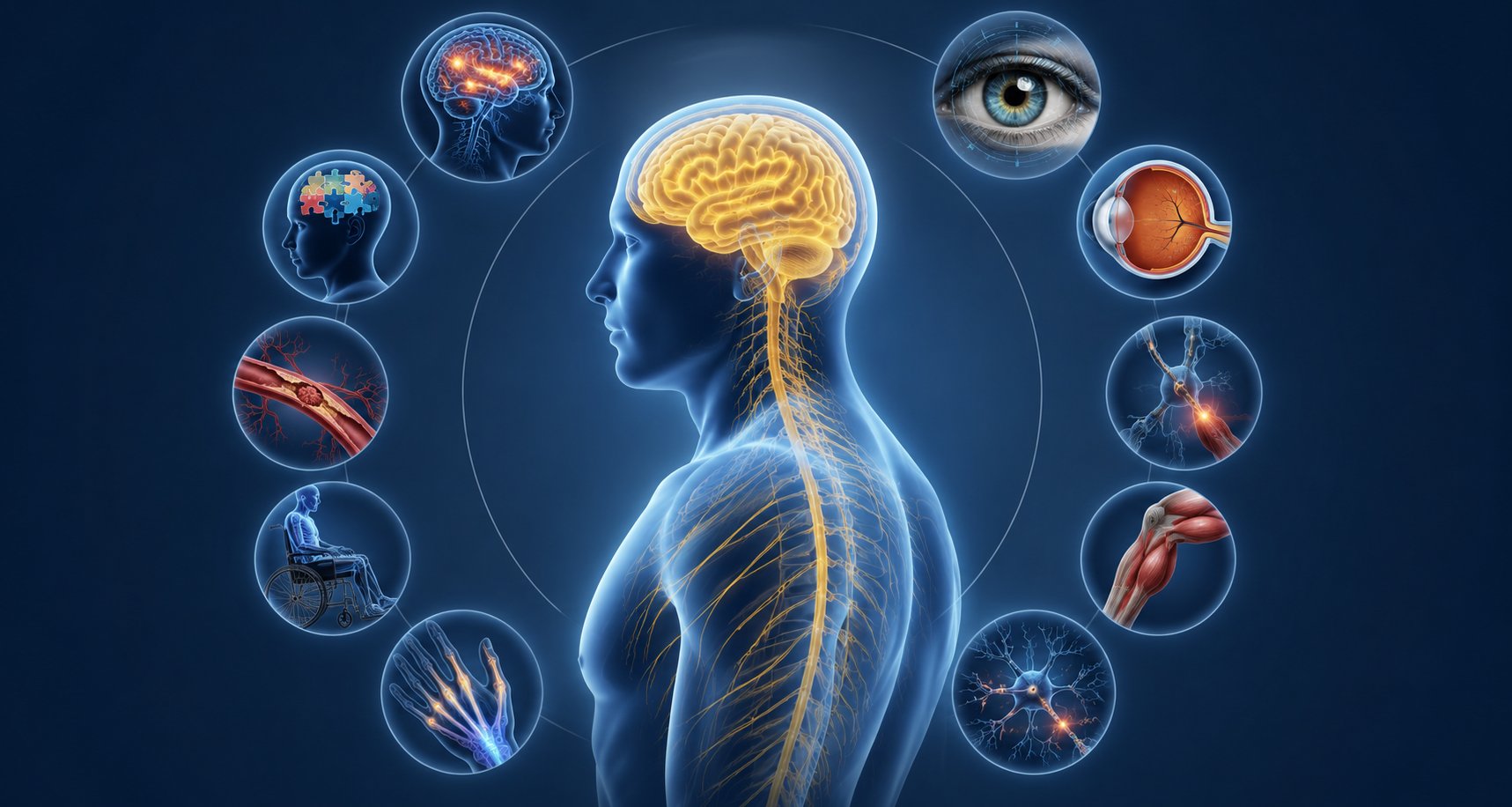
What Is Macular Degeneration?
Macular degeneration is a medical condition that affects the macula — the small central part of the retina responsible for sharp, central vision. It is one of the leading causes of central vision loss in adults over 50 worldwide, though it can affect younger individuals. There are two main types: dry macular degeneration (the more common form, accounting for approximately 85–90% of cases) involves the gradual thinning and deterioration of the macula; and wet macular degeneration involves the growth of abnormal blood vessels beneath the retina that leak fluid and blood, causing rapid and severe vision loss. Age-related macular degeneration (AMD) is the most common form, but genetic factors, smoking, diet, and cardiovascular health also play a significant role.
Common Symptoms
Macular degeneration primarily affects central vision while peripheral (side) vision is typically preserved. Common symptoms include: blurred or reduced central vision in one or both eyes; difficulty reading, even with adequate lighting or corrective lenses; trouble recognising faces; dark, blurry, or distorted spots in the centre of the visual field (a symptom known as a scotoma); reduced colour clarity and contrast sensitivity; visual distortions such as straight lines appearing wavy or bent (a key symptom of wet AMD); and difficulty adapting from bright to dim lighting. Symptoms typically develop gradually in dry AMD but can progress rapidly in wet AMD — any sudden vision change requires urgent assessment.
Research & Treatment Development
Macular degeneration research is progressing significantly. Active areas include: advanced medical innovation approaches targeting retinal pigment epithelium (RPE) cells and photoreceptors; anti-VEGF (vascular endothelial growth factor) injections — currently the gold standard treatment for wet AMD, effective in slowing progression and in some cases improving vision; retinal imaging technology including optical coherence tomography (OCT) and fluorescein angiography enabling precise diagnosis and monitoring; vision-support therapies and low vision rehabilitation; nutritional research — the AREDS2 formulation of vitamins C, E, zinc, copper, lutein, and zeaxanthin is evidence-based for reducing progression risk in intermediate AMD; and targeted molecular approaches targeting degenerative forms of macular degeneration.
Our Approach at Med Cure Centre
Med Cure Centre provides specialist assessment and personalised treatment protocols for macular degeneration. Our ophthalmology team is led by Dr. Pallavee R. Goswami (Ophthalmology, 26 Years Experience). We conduct thorough clinical evaluation including retinal imaging to accurately diagnose the type and stage of macular degeneration before recommending any treatment. We are transparent about what treatment can achieve — our primary goals are to slow progression, preserve remaining vision, and optimise quality of life. We serve patients from India and over 50 countries internationally, with online consultation support and remote follow-up care available. Individual outcomes vary significantly — we encourage early contact for honest assessment.
📄 Scientific References
- National Institutes of Health (NIH) — National Library of Medicine. PubMed database. pubmed.ncbi.nlm.nih.gov
- World Health Organization (WHO) — Neurological Disorders & Eye Health Resources. who.int
- American Academy of Ophthalmology / Neurology — Clinical guidelines and disease statistics. aao.org