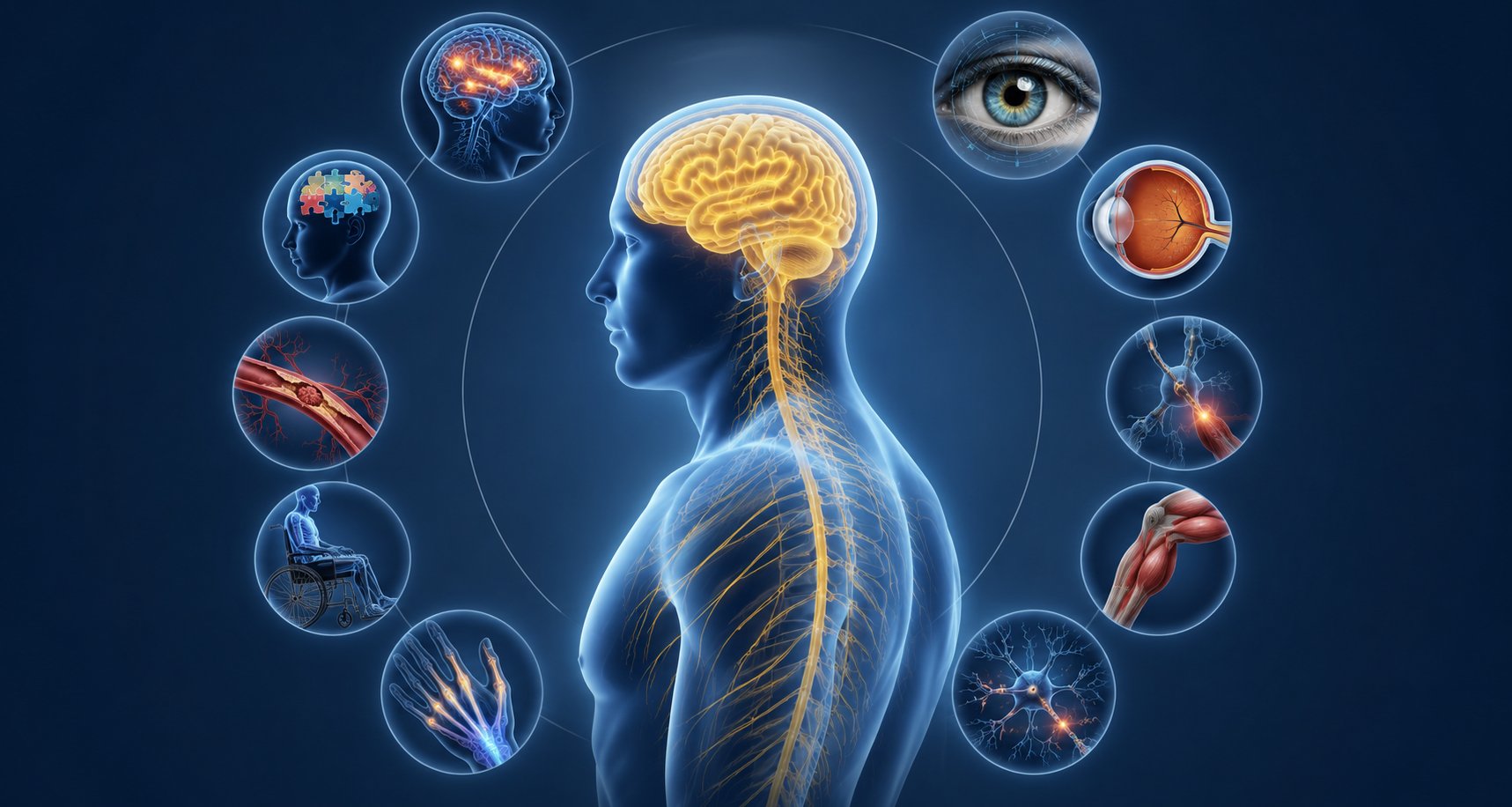
What Is Motor Neuron Disease?
Motor Neuron Disease (MND) is a rare but serious group of conditions that cause the nerve cells (motor neurones) controlling the muscles to stop working progressively over time. Without signals from motor neurones, muscles gradually weaken and waste away. The most well-known form is Amyotrophic Lateral Sclerosis (ALS), also called Lou Gehrig's disease. MND affects both upper motor neurones (in the brain) and lower motor neurones (in the spinal cord and brainstem). It can affect how a person walks, talks, eats, drinks, and breathes. Most forms of MND progress over time, though the rate of progression varies significantly. While there is currently no cure, early intervention and specialist care can help maintain function and quality of life for longer.
Common Symptoms
MND symptoms typically begin gradually and often affect one part of the body first before spreading. Common early symptoms include: muscle weakness in the hands, arms, legs, or around the mouth and throat; difficulty gripping objects or stumbling when walking; slurred speech or difficulty swallowing (dysphagia); muscle cramps and twitching (fasciculations); and fatigue. As the condition progresses, symptoms may include: reduced mobility and increasing need for assistive devices; difficulty breathing — particularly when lying down; significant speech and communication changes; and emotional changes including uncontrolled laughing or crying (emotional lability). Cognitive and behavioural changes can also occur in some forms of MND.
Research & Treatment Development
MND research is one of the most active areas in neurology globally. Current studies focus on: nerve protection and neuroprotective therapies targeting the mechanisms that cause motor neurone degeneration; targeted molecular research — particularly for familial forms of ALS linked to mutations in genes such as SOD1, C9orf72, and TDP-43; protein aggregation research exploring how abnormal protein clumping damages motor neurones; RNA-targeting therapies (antisense oligonucleotides) showing early promise in clinical trials; advanced medical innovation approaches targeting motor neurone function; mobility aids, communication devices, and assistive technology to maintain independence; and personalised care approaches combining medical treatment with respiratory, nutritional, and physiotherapy support.
Our Approach at Med Cure Centre
Med Cure Centre provides specialist assessment, treatment, and supportive care for patients with Motor Neuron Disease. We understand that an MND diagnosis is life-changing and we approach every patient with honesty, compassion, and a commitment to maximising quality of life. Our neurology team, led by Dr. Nitisha Goyal (DM Neurology, Gold Medalist), provides expert clinical assessment and works collaboratively with each patient to develop a personalised treatment protocol. We support international patients with comprehensive online consultation services, in-person treatment at our Gurgaon facility, and remote follow-up care. We are transparent about what our treatment can and cannot achieve — and our goal is always the best possible outcome for each individual patient.
📄 Scientific References
- National Institutes of Health (NIH) — National Library of Medicine. PubMed database. pubmed.ncbi.nlm.nih.gov
- World Health Organization (WHO) — Neurological Disorders & Eye Health Resources. who.int
- American Academy of Ophthalmology / Neurology — Clinical guidelines and disease statistics. aao.org