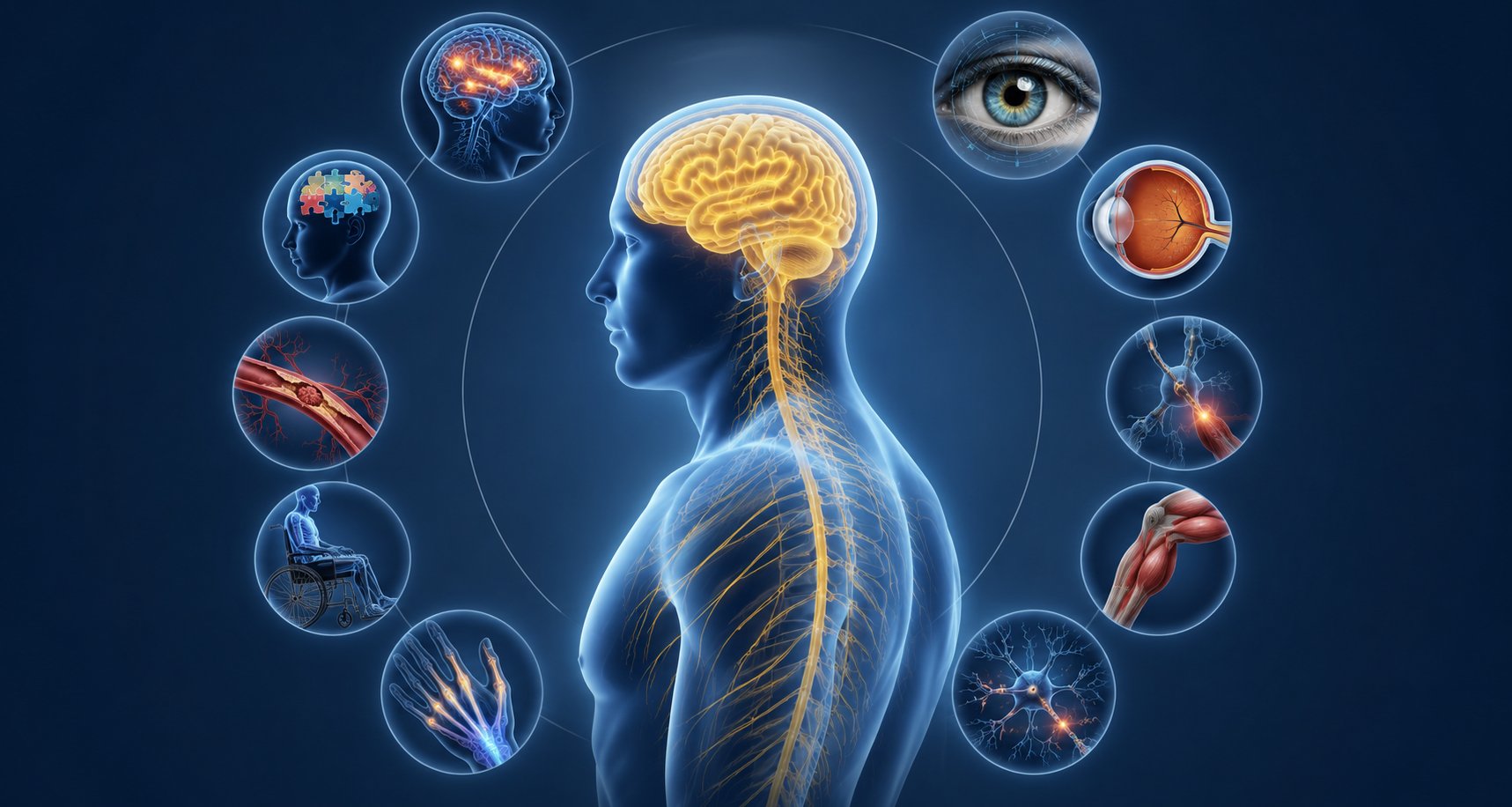
What Is Alzheimer's & Dementia?
Alzheimer's disease and other forms of dementia affect memory, thinking, and daily activities. These conditions usually develop gradually and can significantly affect behaviour, communication, and problem-solving abilities over time. Alzheimer's disease is the most common form of dementia, accounting for 60–80% of cases. It is characterised by the progressive loss of nerve cells and their connections in the brain, leading to memory loss that disrupts daily life, confusion about time and place, and changes in mood and personality. Most people with Alzheimer's are 65 and older, though early-onset Alzheimer's can occur in people in their 40s and 50s. While there is no cure, our treatment approach focuses on slowing progression, stabilising cognitive function, and improving quality of life through personalised protocols.
Common Symptoms
The symptoms of Alzheimer's and dementia vary by individual and stage of progression. Early symptoms include: persistent memory loss that affects daily life (especially remembering recently learned information), difficulty performing familiar tasks at home or at work, confusion about time, dates, seasons or the passage of time, trouble understanding visual images or spatial relationships, difficulty with language — problems finding the right words, withdrawal from social activities and hobbies, and changes in mood or personality including increased anxiety, confusion, suspicion or depression. As the condition progresses, symptoms become more severe and may include significant memory loss, difficulty recognising family members, impaired swallowing, and loss of independence.
Research & Treatment Development
Our treatment programme draws on the latest developments in advanced medical innovation. Current areas of active research and treatment development include: studying brain protein changes (amyloid plaques and tau tangles) linked to memory decline; early detection using advanced brain imaging (MRI, PET) and cerebrospinal fluid biomarkers; cognitive therapy approaches including structured mental exercises and cognitive rehabilitation; brain stimulation approaches including transcranial magnetic stimulation; lifestyle-based support protocols encompassing nutrition optimisation, physical exercise, quality sleep, and mental stimulation; and new treatment medicines focused on slowing disease progression and improving quality of life. Our specialists review each patient's individual profile to design a personalised treatment plan targeting the specific mechanisms underlying their condition.
Our Approach at Med Cure Centre
At Med Cure Centre, we take a comprehensive, patient-centred approach to Alzheimer's and dementia care. Our team of specialists — led by Dr. Nitisha Goyal, Senior Consultant Neurologist — works closely with each patient and their family to assess current cognitive function, identify disease stage, and design an evidence-based treatment protocol. We are committed to honest, transparent communication about realistic outcomes. Our goal is to help patients maintain independence for as long as possible and to support families through every stage of the journey. International patients are fully supported with online consultations, travel assistance, and remote follow-up care. Individual outcomes vary — we provide honest, realistic guidance to every patient.
📄 Scientific References
- National Institutes of Health (NIH) — National Library of Medicine. PubMed database. pubmed.ncbi.nlm.nih.gov
- World Health Organization (WHO) — Neurological Disorders & Eye Health Resources. who.int
- American Academy of Ophthalmology / Neurology — Clinical guidelines and disease statistics. aao.org