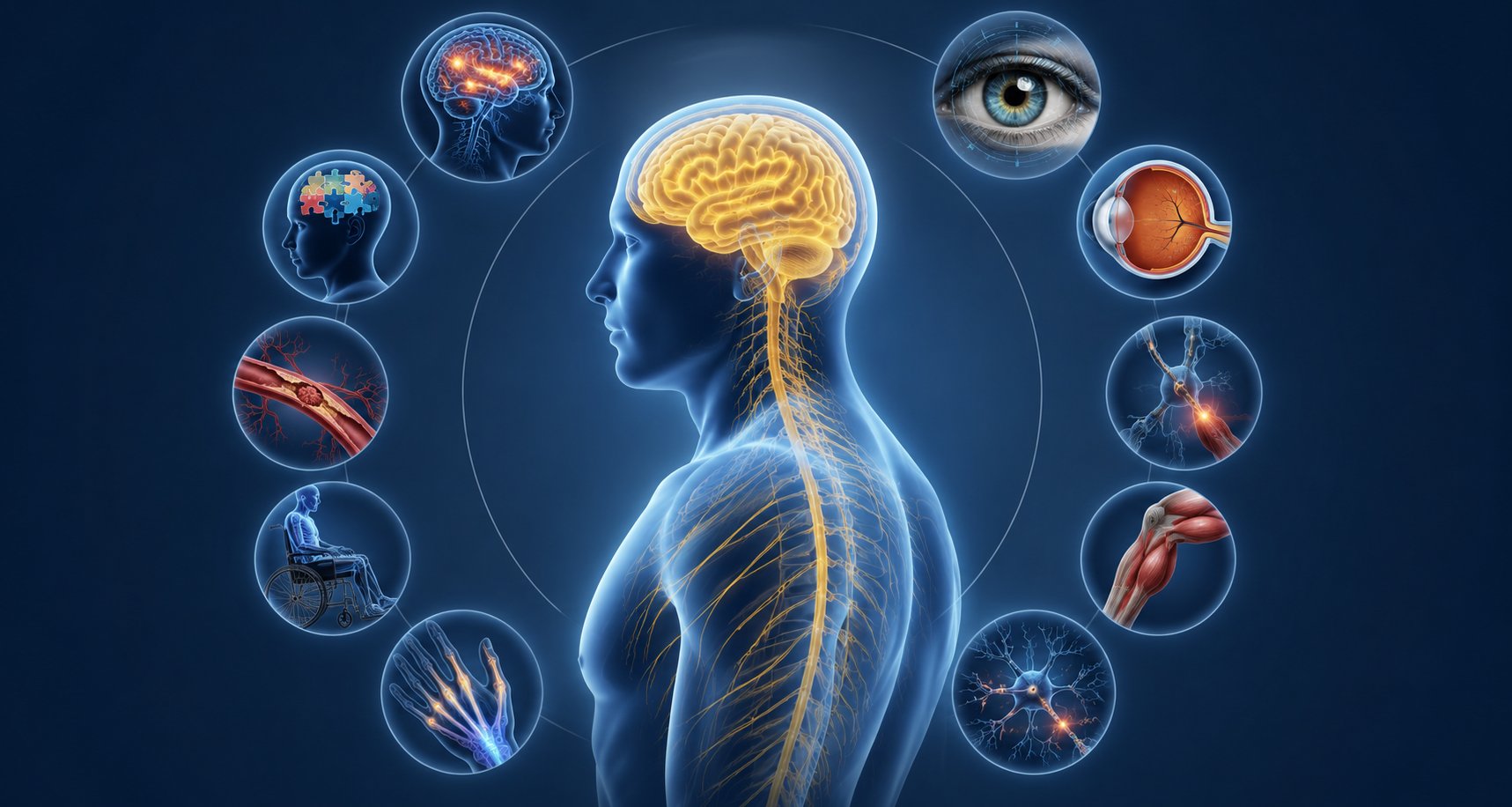
What Is Cerebral Palsy?
Cerebral palsy (CP) is a group of permanent conditions that affect movement, posture, and muscle coordination. It is caused by abnormal brain development or damage to the developing brain — most often occurring before, during, or shortly after birth. Cerebral palsy is the most common physical disability in childhood, affecting approximately 17 million people worldwide. Despite being a permanent condition, the disability it causes is not progressive — meaning it does not worsen over time, though symptoms may change as the individual grows. The type and severity of cerebral palsy varies greatly between individuals, ranging from mild movement difficulties to more significant physical disability requiring full-time support. Many people with cerebral palsy lead full, active, and independent lives with the right support.
Common Symptoms
Cerebral palsy affects muscle tone, movement, and motor skills. Common symptoms include: muscle stiffness (spasticity) or increased muscle tone; muscle weakness; difficulty walking, balancing, or coordinating movements; delayed motor development milestones (such as sitting, crawling, or walking); involuntary movements (athetosis or dyskinesia); coordination challenges and poor balance (ataxia); difficulty with fine motor tasks such as writing or using utensils; and in some cases, associated conditions including epilepsy, speech and language difficulties, visual or hearing impairment, and learning differences. Early intervention with intensive therapy and appropriate medical support has been shown to significantly improve long-term outcomes.
Research & Treatment Development
Advances in cerebral palsy research and treatment are improving outcomes for individuals worldwide. Active research areas include: physical and occupational therapy innovations — including high-intensity training protocols and constraint-induced movement therapy; assistive mobility technologies such as orthotic devices, walkers, and powered wheelchairs; advanced medical innovation approaches exploring improvement in muscle and nerve function; robotics for movement support and gait rehabilitation; early intervention programmes targeting the critical developmental window in the first years of life; and novel pain management and spasticity treatment approaches including botulinum toxin and selective dorsal rhizotomy (SDR). Our treatment protocols incorporate the best available evidence with a focus on maximising each child's or adult's functional potential.
Our Approach at Med Cure Centre
At Med Cure Centre, we understand that every person with cerebral palsy is different and deserves a treatment programme tailored to their specific needs and goals. Our multidisciplinary team — led by Dr. Nitisha Goyal (Senior Consultant Neurologist) and including specialists in physical rehabilitation — works closely with patients and families to assess functional ability and design a practical, goal-focused treatment protocol. We serve patients from early childhood through adulthood and support families throughout every stage of the process. International patients benefit from our comprehensive support package including online pre-assessment, in-person treatment in Gurgaon, and remote follow-up care.
📄 Scientific References
- National Institutes of Health (NIH) — National Library of Medicine. PubMed database. pubmed.ncbi.nlm.nih.gov
- World Health Organization (WHO) — Neurological Disorders & Eye Health Resources. who.int
- American Academy of Ophthalmology / Neurology — Clinical guidelines and disease statistics. aao.org