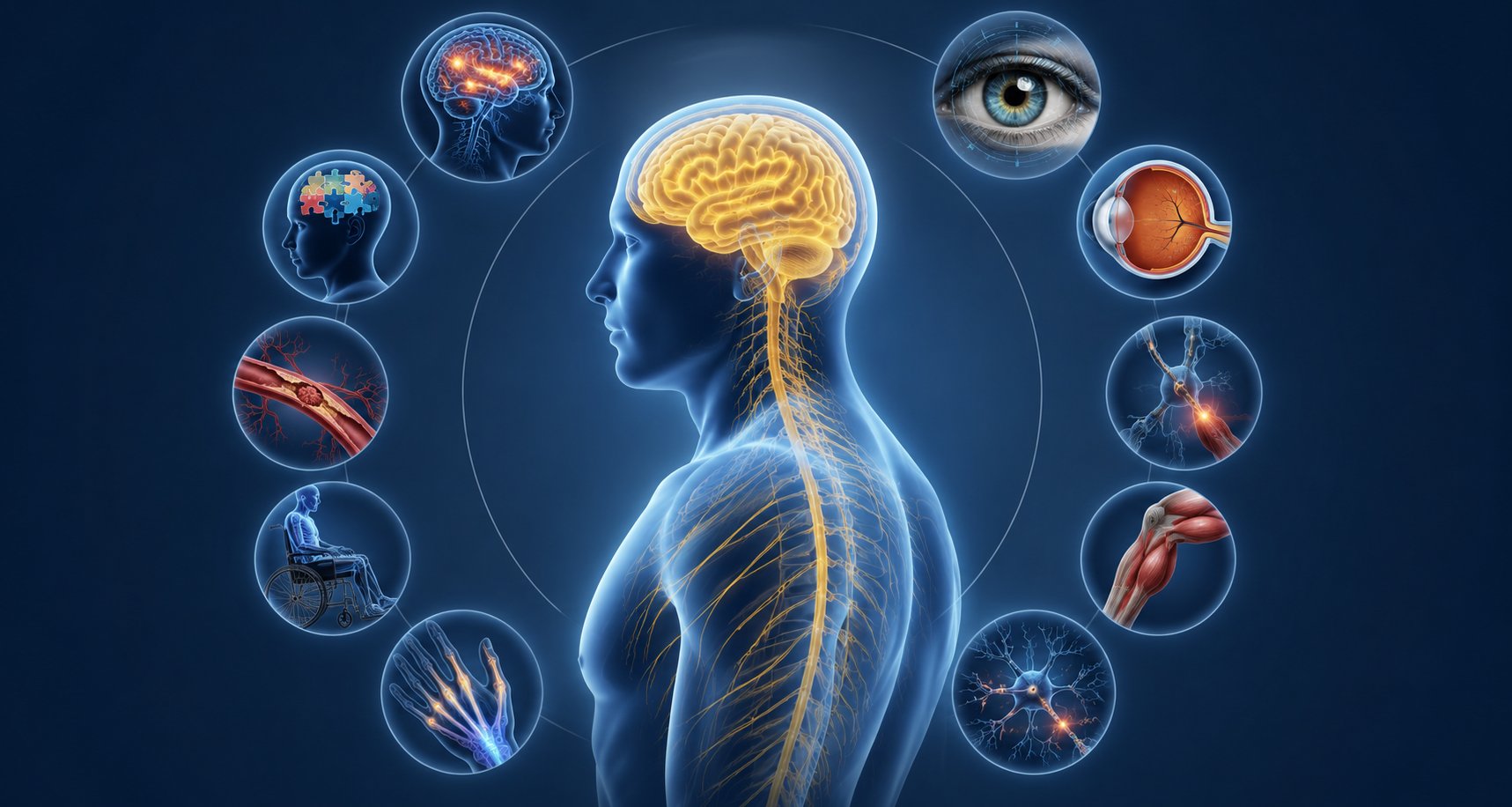
What Is Parkinson's Disease?
Parkinson's disease is a progressive neurological disorder that primarily affects the motor system — the part of the brain responsible for movement and coordination. It occurs when nerve cells (neurons) in a region of the brain called the substantia nigra are lost or become impaired. These neurons produce dopamine, a chemical messenger essential for smooth, coordinated movement. Without enough dopamine, the brain is unable to direct the body to move normally. Parkinson's disease affects approximately 10 million people worldwide and is the second most common neuroprogressive condition after Alzheimer's disease. While more common in people over 60, approximately 10% of people with Parkinson's are diagnosed under the age of 50.
Common Symptoms
Parkinson's disease is characterised by four primary motor symptoms: tremor (shaking) — typically a resting tremor affecting the hands, arms, legs, jaw, or face; bradykinesia (slowness of movement) — reduced ability to move and slower movement overall; muscle rigidity — stiffness in the limbs and trunk; and postural instability — impaired balance and coordination leading to falls. Non-motor symptoms, which are often underrecognised, include sleep disturbances, cognitive changes (including dementia in later stages), depression and anxiety, autonomic dysfunction (affecting blood pressure and digestion), pain, and changes in speech and handwriting (micrographia). Symptoms and their progression vary widely between individuals.
Research & Treatment Development
Research into Parkinson's disease is advancing rapidly. Key areas include: brain cell protection strategies — neuroprotective therapies aimed at slowing or halting the loss of dopaminergic neurons; advanced medical innovation approaches targeting dopamine-producing cells; deep brain stimulation (DBS) advancements — DBS involves implanting electrodes in specific brain regions and has shown significant improvement in motor symptoms for many patients; digital monitoring and wearable devices enabling real-time symptom tracking and personalised treatment adjustment; alpha-synuclein-targeting therapies — alpha-synuclein protein aggregation is a hallmark of Parkinson's and a major research target; and new medicines and protocols to improve symptom management and quality of life.
Our Approach at Med Cure Centre
Med Cure Centre offers specialist Parkinson's disease assessment, treatment protocols, and ongoing management support. Our neurology team, led by Dr. Nitisha Goyal (Senior Consultant Neurologist, DM Neurology Gold Medalist), conducts thorough assessment of motor and non-motor symptoms before recommending a treatment approach. We work with patients at all stages of Parkinson's disease and tailor our protocols to the individual's specific presentation, progression rate, and personal priorities. We serve patients from India and internationally, with full online consultation support for those unable to travel initially. Our goal is to help every patient maintain the best possible quality of life and independence for as long as possible.
📄 Scientific References
- National Institutes of Health (NIH) — National Library of Medicine. PubMed database. pubmed.ncbi.nlm.nih.gov
- World Health Organization (WHO) — Neurological Disorders & Eye Health Resources. who.int
- American Academy of Ophthalmology / Neurology — Clinical guidelines and disease statistics. aao.org