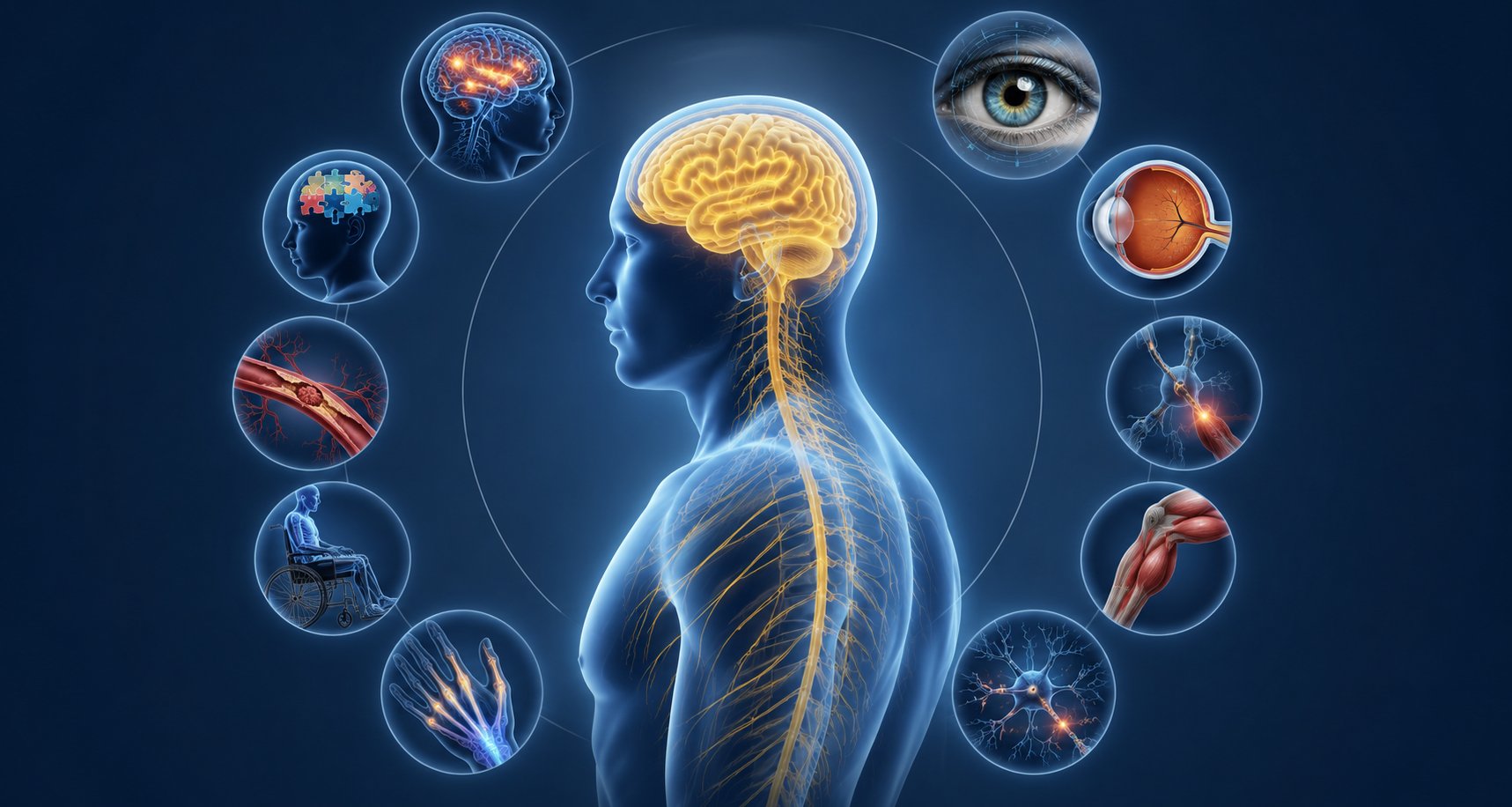
What Is Brain Stroke / Injury?
A stroke occurs when blood flow to a part of the brain is interrupted or reduced, preventing brain tissue from getting the oxygen and nutrients it needs. Brain cells begin to die within minutes of a stroke. Brain injuries can also occur due to trauma (such as falls or accidents), lack of oxygen (hypoxia), or other medical events. Stroke is one of the leading causes of death and long-term disability worldwide. There are two main types of stroke: ischaemic stroke (caused by a blood clot blocking a blood vessel to the brain — accounting for approximately 87% of all strokes) and haemorrhagic stroke (caused by a blood vessel bursting in or around the brain). Traumatic brain injury (TBI) can occur at any age and ranges from mild concussion to severe injury causing long-term or permanent disability.
Common Symptoms
Symptoms of stroke typically come on suddenly and include: weakness or numbness on one side of the body (face, arm, or leg); difficulty speaking or understanding speech (aphasia); sudden severe headache with no known cause; loss of balance or coordination; vision problems in one or both eyes; and confusion or disorientation. The FAST acronym (Face drooping, Arm weakness, Speech difficulty, Time to call emergency services) is the internationally recognised guide for stroke recognition. After a stroke or brain injury, ongoing symptoms may include cognitive impairment, memory problems, fatigue, emotional changes, and varying degrees of physical disability. Recovery depends on the location and severity of the injury.
Research & Treatment Development
Research in stroke and brain injury recovery is advancing rapidly. Key areas include: advanced neuroplasticity and brain recovery studies — the science of how the brain reorganises and forms new connections after injury; advanced medical innovation approaches targeting damaged neural tissue and promoting recovery; advanced rehabilitation techniques including constraint-induced movement therapy (CIMT) and task-specific training; robotics and assistive devices for physical rehabilitation; faster emergency response protocols (time is critical — early treatment dramatically improves outcomes); brain stimulation therapies; digital monitoring and telerehabilitation platforms; and nutritional and lifestyle factors supporting neurological recovery. Our team combines the latest evidence with personalised care to maximise each patient's recovery potential.
Our Approach at Med Cure Centre
Med Cure Centre provides specialist neurorehabilitation and advanced treatment support for stroke and brain injury patients. Our programme is designed to support both the acute recovery phase and long-term rehabilitation. Dr. Nitisha Goyal (Senior Consultant Neurologist, DM Neurology Gold Medalist) leads our neurology team. We assess each patient's specific injury profile, cognitive and physical function, and personal goals before developing a tailored treatment protocol. We support international patients with online pre-consultation, in-person treatment at our Gurgaon facility, and remote follow-up care from home. Early intervention is associated with the best recovery outcomes — we encourage patients and families to reach out as soon as possible.
📄 Scientific References
- National Institutes of Health (NIH) — National Library of Medicine. PubMed database. pubmed.ncbi.nlm.nih.gov
- World Health Organization (WHO) — Neurological Disorders & Eye Health Resources. who.int
- American Academy of Ophthalmology / Neurology — Clinical guidelines and disease statistics. aao.org