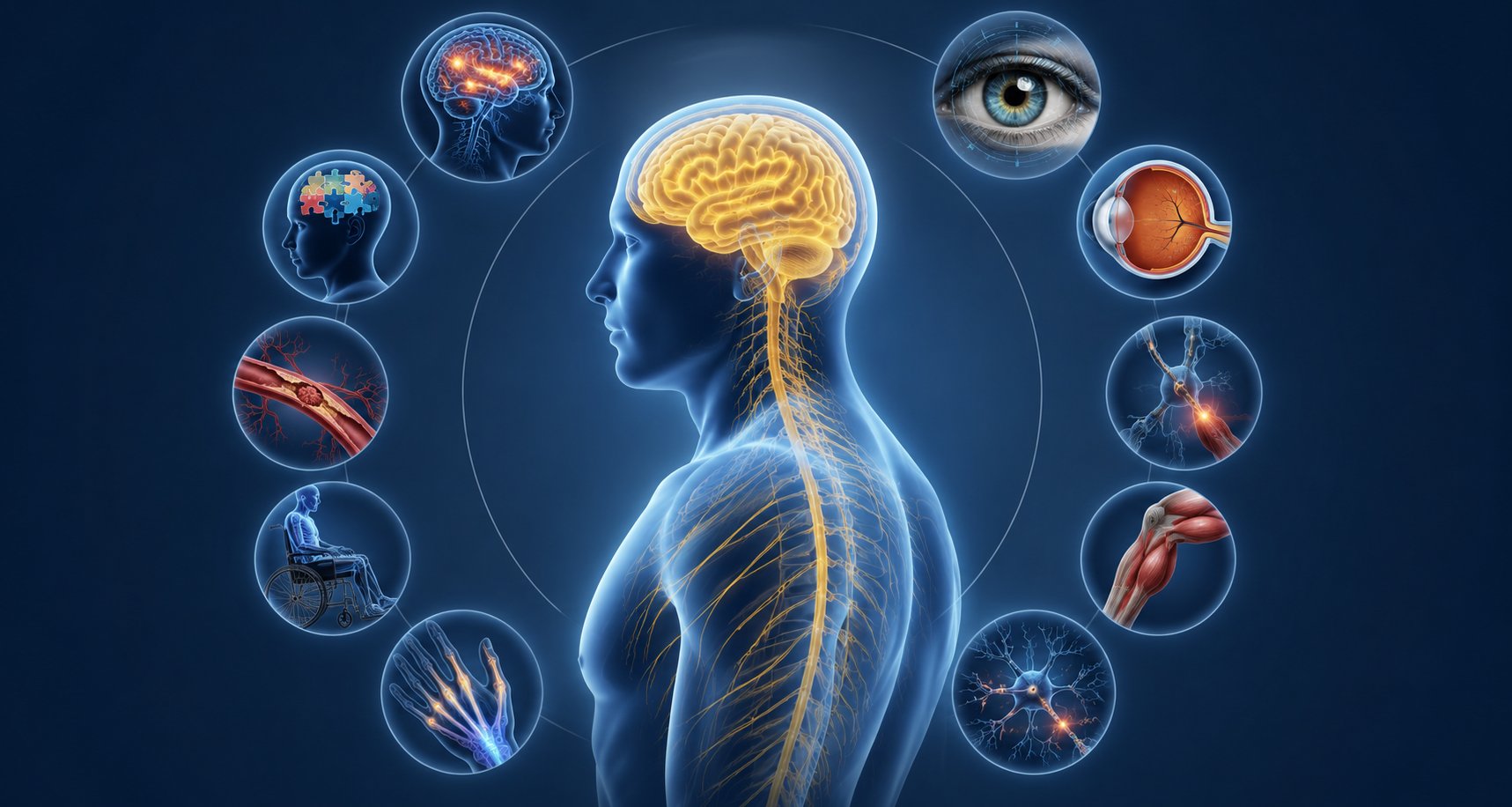
What Is Autism Spectrum Disorder?
Autism Spectrum Disorder (ASD) is a complex developmental condition that affects communication, behaviour, learning, and social interaction. It is described as a 'spectrum' disorder because it affects individuals very differently — no two people with autism are the same. Some individuals with ASD are highly skilled in specific areas, while others require significant daily support. ASD is typically identified in early childhood, though some individuals are diagnosed later in life. It is one of the most common developmental conditions worldwide, affecting approximately 1 in 36 children according to recent epidemiological data. ASD is not a disease that can be 'cured', but with the right therapeutic and medical support, significant improvements in communication, social skills, and independence can be achieved.
Common Symptoms
ASD presents differently across individuals, but common signs include: difficulty with social interaction — such as challenges understanding social cues, making eye contact, or forming peer relationships; repetitive behaviours or strict adherence to routines — such as repeating words, lining up toys, or becoming distressed at small changes; sensitivity to sensory stimuli including sounds, lights, textures, tastes, or smells; delayed speech or communication differences — some individuals are non-verbal while others have advanced vocabularies but struggle with conversational use of language; and a strong, focused interest in specific topics or objects. Early identification and intervention are associated with significantly better long-term outcomes.
Research & Treatment Development
Research into ASD has accelerated significantly in recent years. Current study and treatment areas include: early developmental screening tools enabling intervention before age 3 — the most critical window for neuroplasticity; communication therapies including Applied Behaviour Analysis (ABA), speech and language therapy, and augmentative and alternative communication (AAC) systems; sensory integration support and occupational therapy; technology-assisted learning programmes including tablet-based communication aids and social skills training software; genetic and neurological research exploring the multiple gene variants associated with ASD; advanced medical innovation approaches targeting neurological function and inflammatory pathways; and parent-mediated early intervention programmes. Our treatment protocols are built on evidence from the most current clinical research.
Our Approach at Med Cure Centre
Med Cure Centre offers specialist assessment and personalised treatment protocols for individuals with Autism Spectrum Disorder. Our approach is highly individualised — we recognise that each person with ASD has unique strengths and challenges. Under the guidance of Dr. Nitisha Goyal (DM Neurology, Gold Medalist), our team conducts a thorough clinical assessment before recommending any treatment pathway. We work closely with families, providing clear guidance on therapeutic approaches, realistic expectations, and how to support the individual at home. We serve international patients with full online consultation support and post-treatment remote follow-up.
📄 Scientific References
- National Institutes of Health (NIH) — National Library of Medicine. PubMed database. pubmed.ncbi.nlm.nih.gov
- World Health Organization (WHO) — Neurological Disorders & Eye Health Resources. who.int
- American Academy of Ophthalmology / Neurology — Clinical guidelines and disease statistics. aao.org