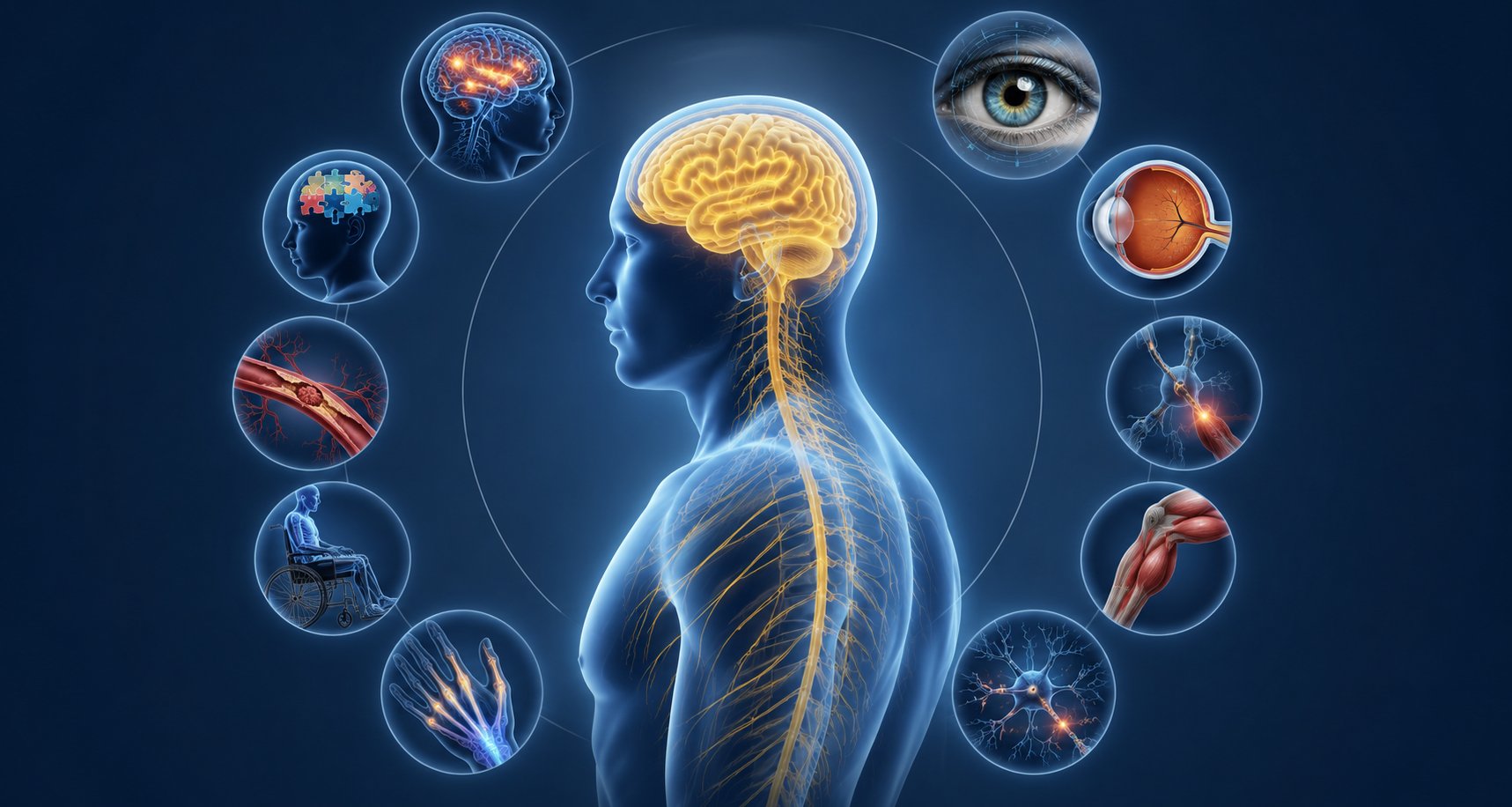
What Is Muscular Dystrophy?
Muscular dystrophy (MD) is not a single condition but rather a group of over 30 degenerative genetic disorders that cause progressive weakness and degeneration of skeletal muscles responsible for controlling movement. These conditions are caused by mutations in genes that code for proteins needed to maintain normal muscle structure and function. Without these proteins, muscle cells progressively break down and are replaced by fibrous or fatty tissue. The most common and most severe form is Duchenne muscular dystrophy (DMD), caused by mutations in the dystrophin gene and primarily affecting boys — with symptoms typically appearing between ages 3 and 5. Other forms include Becker muscular dystrophy, limb-girdle muscular dystrophy, facioscapulohumeral dystrophy (FSHD), and myotonic dystrophy, each with different patterns of muscle involvement and rates of progression.
Common Symptoms
Muscular dystrophy symptoms vary by type but commonly include: progressive muscle weakness — typically affecting the proximal (shoulder and hip) muscles first; difficulty walking — including a characteristic waddling gait and difficulty climbing stairs; frequent falls; fatigue with physical exertion; pseudohypertrophy (apparent muscle enlargement due to fatty infiltration) — particularly common in the calf muscles in Duchenne MD; joint contractures as muscles tighten and shorten; reduced balance and coordination; in some forms, cardiac involvement causing cardiomyopathy; respiratory complications including reduced lung function and breathing difficulties; and in Duchenne MD, progressive loss of ambulation typically occurring by the early teenage years. Cognitive and behavioural differences can also occur in some forms.
Research & Treatment Development
Muscular dystrophy research is advancing rapidly, with several disease-modifying treatments now available or in late-stage trials. Key areas include: gene and muscle repair studies — including exon-skipping therapies (eteplirsen, golodirsen, viltolarsen for DMD), gene replacement therapy, and CRISPR-Cas9 gene editing approaches; advanced medical innovation approaches targeting muscle regeneration; micro-dystrophin targeted molecular therapy using adeno-associated virus (AAV) vectors — showing significant promise in Phase III clinical trials for Duchenne MD; RNA-targeting antisense oligonucleotide (AON) therapies; mobility aids, orthotic devices, and powered wheelchairs; respiratory management and ventilatory support; physical therapy innovations including hydrotherapy and functional electrical stimulation; and personalised treatment research combining genotyping with individualised therapeutic protocols.
Our Approach at Med Cure Centre
Med Cure Centre provides specialist assessment, treatment protocols, and supportive care for patients with muscular dystrophy. Dr. B.N. Singh (Senior General Physician & General Medicine & Wellness Specialist, 30+ Years Experience) leads our muscular dystrophy programme alongside specialist neurology support from Dr. Nitisha Goyal. We conduct thorough genetic and clinical assessment before designing any treatment protocol. Our goals are to slow muscle degeneration, preserve function for as long as possible, manage complications proactively, and support patients and families with practical, compassionate guidance. We treat patients of all ages and serve international patients with online consultation and remote follow-up support.
📄 Scientific References
- National Institutes of Health (NIH) — National Library of Medicine. PubMed database. pubmed.ncbi.nlm.nih.gov
- World Health Organization (WHO) — Neurological Disorders & Eye Health Resources. who.int
- American Academy of Ophthalmology / Neurology — Clinical guidelines and disease statistics. aao.org